As we get closer to harvest, our team is continuing to scout fields across the Cornelius Seed footprint—and we're seeing some late-season disease pressure worth noting.
Recently, both southern rust and tar spot were identified in a corn field in Fayette County, Iowa.
At this point in the growing season, these diseases may not have enough time to cause significant yield loss in some fields. However, every field is different. Crop stage, disease severity, hybrid susceptibility and the amount of grain fill remaining all need to be considered when evaluating potential impact.
The important message right now: don't stop scouting just because we're getting close to harvest.
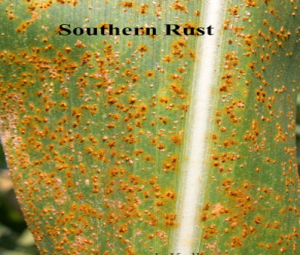 What Are We Seeing?

Southern rust and tar spot are two very different corn diseases, but both can spread quickly under favorable conditions.
Southern rust typically appears as small, orange to tan pustules, primarily on the upper leaf surface. Under the right conditions, the disease can develop rapidly and reduce the amount of healthy leaf tissue available during grain fill.
Tar spot is recognized by its small, raised black spots that look like flecks of tar and cannot easily be rubbed off the leaf. Once established in an area, the pathogen can survive in infected corn residue, making field history an important consideration for future management.
Finding either disease doesn't automatically mean a fungicide application is needed—especially this late in the season.
Is It Too Late to Treat?
That's a question that needs to be answered field by field.

The value of a fungicide application depends on several factors, including the corn's growth stage, disease severity and progression, hybrid susceptibility, amount of healthy leaf area remaining and how much grain fill is left.
As corn approaches maturity, the potential return from another fungicide application decreases. That's why it's important to know the crop stage and correctly identify what you're seeing before making a treatment decision.
If you're unsure whether an application is warranted, reach out to your Cornelius Seed Rep or Agronomist to evaluate the field.
If It's Too Late to Treat, Why Keep Scouting?
Because what you see today can help you make better decisions in 2027.
As you're walking fields, take note of:
- Which fields have southern rust or tar spot
- Which hybrids are showing symptoms
- Differences in severity between hybrids
- Where disease first appeared and how widespread it became
- What fungicide was applied and when
- How the crop finishes and whether standability becomes a concern
Don't rely on memory once harvest gets busy. Take pictures, record the hybrid and make notes about what you're seeing.
Those observations can become valuable information when you're sitting down this winter to discuss hybrid placement and next year's disease-management strategy.
Use What You Learn for Hybrid Selection
Disease tolerance is another piece of the hybrid-selection puzzle.
At Cornelius Seed, we include Southern Rust ratings in our Corn Product Guide to help growers evaluate hybrids and determine where they may be the best fit.
A disease rating shouldn't be the only reason you select or eliminate a hybrid. Yield potential, maturity, standability, agronomic characteristics and field fit all matter. But if southern rust has become a recurring issue on certain acres, those ratings can provide another piece of information when building your 2027 plan.
The same thinking applies to tar spot. If you know which fields experienced pressure this season, that history can help guide hybrid placement, scouting priorities and fungicide conversations next year.
Don't Let Harvest Erase What You Learned
Once the combine rolls through a field, it's easy to move on and forget what the crop looked like a few weeks earlier.
That's why late-season scouting matters.
Even if southern rust or tar spot isn't going to significantly affect yield this late in the season, knowing it's there gives you information you didn't have before.
Scout it now. Document what you're seeing. Compare how your hybrids are handling the pressure. Then bring that information to the table when planning for 2027.
Have questions about southern rust, tar spot or what you're seeing in your fields? Reach out to your Cornelius Seed Rep or Agronomist. We're happy to take a look and help you determine what it could mean for this harvest and next year's crop.
Plant It. Profit.